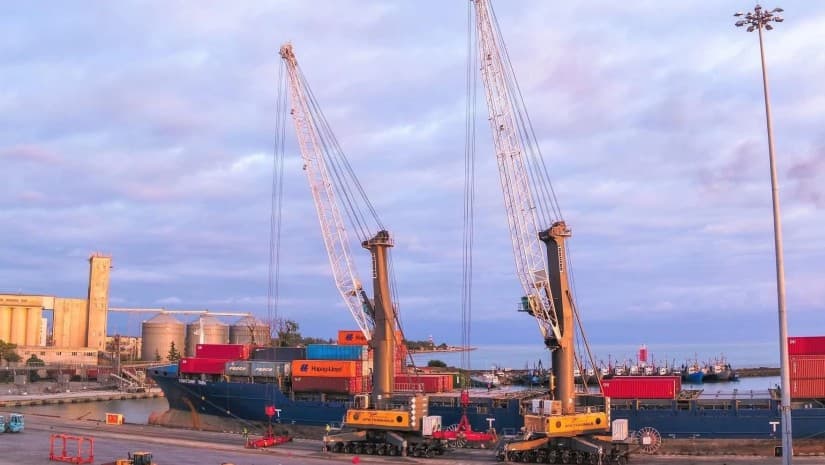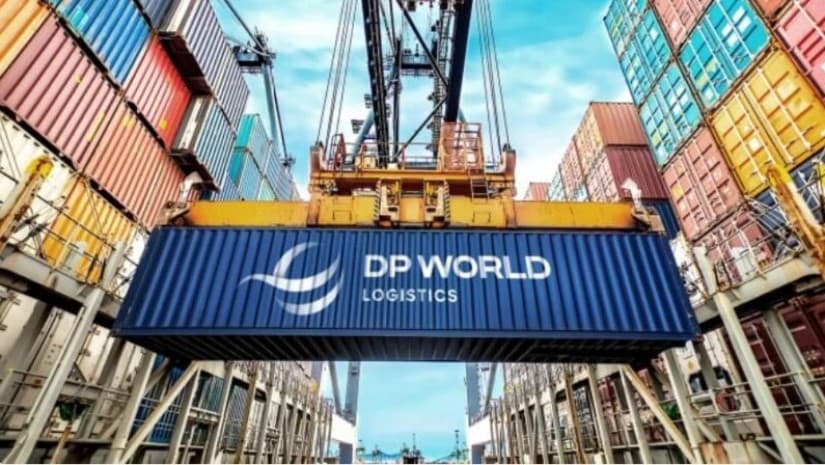
Georgia would benefit from bringing into Anaklia port a global player that already manages several infrastructure assets along the Middle Corridor, according to the Transport Corridor Research Centre (TCRC). The centre suggests that such a single-route operator could be DP World, the UAE-based global operator of ports, logistics and transport infrastructure.
TCRC calls Georgia an "empty link" in DP World's network for now: the country is not listed as a separate operating market, whereas Middle Corridor states Turkey, Romania, Uzbekistan, Azerbaijan, Kazakhstan and China are. In future, it writes, Georgia could become a key player in a unified route organised by DP World, with Anaklia as its entry point.
The landlord model
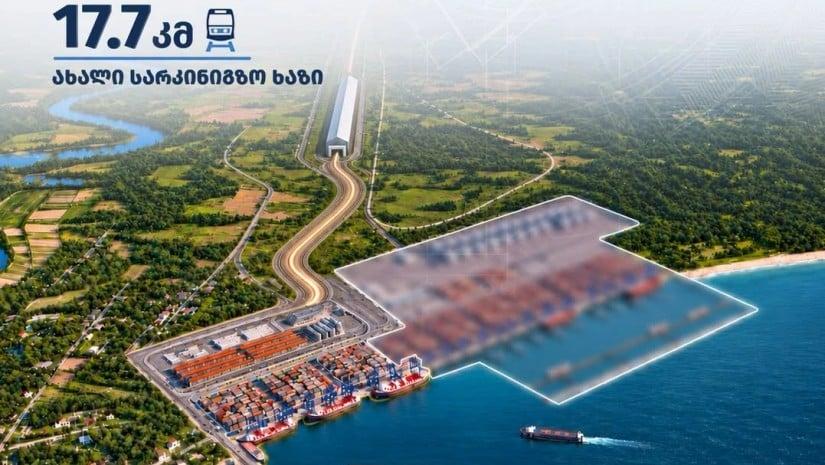
According to TCRC, DP World's involvement fits Anaklia better since the Georgian government decided in July 2026 to develop the deep-sea port under a landlord model. The state retains the core infrastructure, while private companies operate terminals and invest under long-term leases. The government has said its aim is to make Anaklia a hub for international capital and cargo. TCRC acknowledges that construction is still viewed over a long horizon and that some of its reasoning is hypothetical.
Why a network operator
DP World manages more than 60 ports and terminals worldwide, and its network handled 95 million TEU in 2025. It runs more than 500 vessels between 200 ports, mostly on short-sea feeder services. TCRC argues that, unlike a conventional port operator, it controls the entire shipping chain. That suits the Middle Corridor, where competitiveness depends on ports, railways, ferries, warehouses and final-mile logistics working as one system, not on a single port's capacity.
DP World along the corridor
- Uzbekistan: a recent agreement with Tashkent Invest to start building a $288 million multimodal terminal for 20 million tonnes of cargo and 150,000 TEU, linked to rail, highways and Tashkent International Airport.
- Kazakhstan: at Khorgos, where China's 1,435 mm and Kazakhstan's 1,520 mm gauges meet, DP World manages logistics at the Khorgos Gateway dry port inside the Khorgos – East Gate SEZ, which it does not own outright. It signed framework agreements on the Khorgos and Aktau zones in 2019, but by 2024 was no longer an active operator of Aktau port.
- Azerbaijan: Alat port is run by the state company Port of Baku, not DP World. Cooperation began with consulting for the Alat Free Trade Zone and in 2025–2026 moved to talks on digitalisation, block trains, investment and a possible joint venture.
- Turkey: its strongest western node. Yarımca, on the Gulf of İzmit, is directly rail-connected, so block trains can reach the terminal and enter the corridor via the Baku–Tbilisi–Kars railway.
- Romania: in Constanța, DP World operates Constanta South Container Terminal (CSCT) under a concession renewed in 2019 for 30 years, to 2049, with 1 million tonnes of capacity and 14.5 m depth. It also runs a Ro-Ro terminal and a rail terminal whose three 600-metre sidings can handle three 30-wagon trains at once. It has invested €250 million and in 2026 agreed a further €25 million green loan with the EBRD.
Lessons for Anaklia
TCRC finds Aktau instructive: it raises the question of what happens when a global operator is given, on a long-term lease, not only port handling but the chance to develop the surrounding economic zone, dry port and rail network as one system. Constanța, where land and core infrastructure stay with the state while DP World invests in the terminal and manages rail, road and ferry links, is presented as a model of interest to Georgia.
What it means for investors
No operator has been chosen for Anaklia; the concrete development is the July 2026 decision opening terminal operation and investment to private companies on long-term leases. TCRC's emphasis on integrated networks is the useful signal: under that approach, port capacity is valued alongside rail terminals, dry ports, warehousing and economic zones, so demand for connected logistics land around Georgia's Black Sea gateways would depend on the chosen operator's wider strategy.
Source: BM.ge, 31 August 2026.