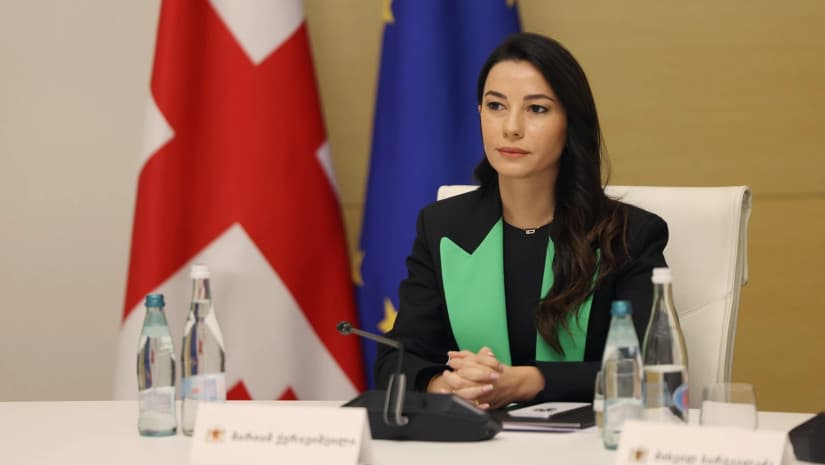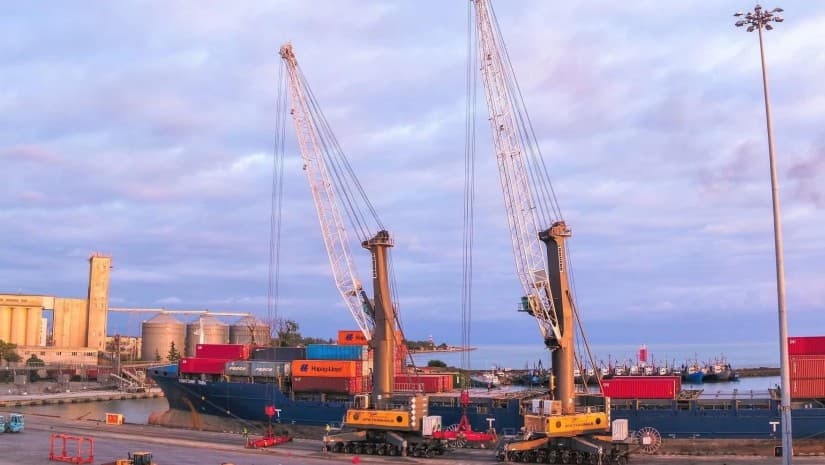
Georgia's Minister of Economy and Sustainable Development, Mariam Kvrivishvili, used her opening address at the Georgia International Maritime Forum (GIMF 2026) in Batumi to set out the timetable and funding plan for the Anaklia Deep Sea Port, which she described as the central project for developing the country's maritime capability.
She also observed that operational indicators in the port sector are nearing peak capacity, while arguing that better-organised harbour workflows and improved management models allow seaports to keep handling growing cargo flows efficiently. The state, she said, is working actively with the private sector to make full use of the capacity of Georgia's maritime infrastructure.
Timeline, capacity and funding
According to the minister, commercial operations at Anaklia are scheduled to begin in 2029. At launch, the port is expected to offer annual throughput capacity of at least 600,000 TEU, alongside roughly 10 million tonnes of dry bulk cargo.
The state is committing USD 700 million to the project. Including private sector investment, total capital expenditure is put at USD 1.1 billion.
Kvrivishvili said Anaklia is being developed under the landlord port model, which she presented as a structure that balances the interests of the state and private investors while leaving room for wide regional and international participation.
Beyond physical infrastructure
The minister stressed that infrastructure is only part of the picture. In her view, the competitiveness of the Middle Corridor depends equally on synchronised transport schedules, simpler customs procedures and interoperable digital systems. She said Georgia is prepared to work with partner countries, international organisations and private companies so that the corridor operates as a single, seamless, efficient and reliable transit route.
Seafarers and maritime skills
Kvrivishvili also pointed to human capital as one of the sector's main strengths. Georgia now has more than 21,000 certified seafarers, compared with around 8,000 in 2012, and their contribution to the national economy is estimated at approximately GEL 1 billion. She attributed much of this growth to more than GEL 50 million of government investment in maritime education and training since 2012, and noted that Georgian seafarers are now formally recognised by 75 leading maritime flag states, including the European Union.
What it means for investors
The minister's remarks provide a clear reference point for planning: a 2029 start date, a stated initial capacity and a defined split between public and private capital under a landlord model. For investors, that structure implies that private participation is expected mainly in terminal operation and related services. The acknowledgement that existing port operations are approaching peak capacity is also relevant for assets serving today's gateways, since until Anaklia opens, handling larger volumes will rely largely on the efficiency gains the minister described. Demand for rail-connected land, storage and logistics services on the Black Sea coast will ultimately depend on how closely Anaklia's new capacity and the corridor's customs and digital reforms advance together.
Source: 1TV, 7 September 2026.