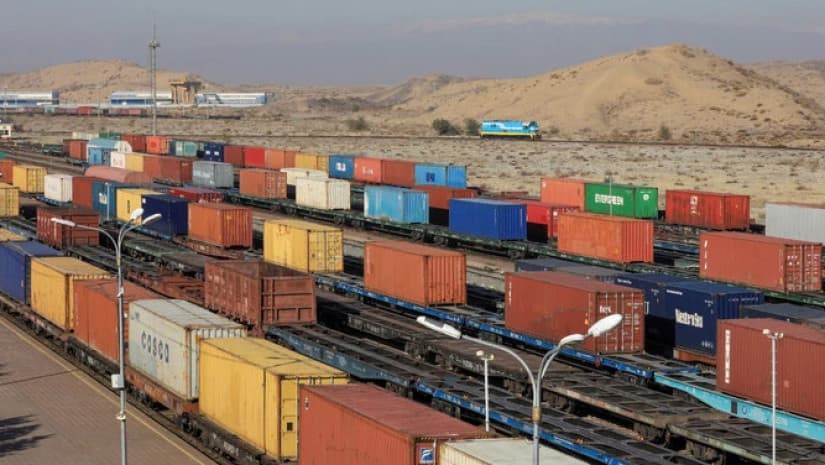
Container traffic on the Middle Corridor is on a rising trajectory. According to data from Kazakhstan's national railway, transit container shipments along the Trans-Caspian International Transport Route (TITR) reached 36,000 TEU in the first seven months of 2026, some 50% more than in the same period of 2025.
Growth continued into August. Speaking at the Georgian International Maritime Forum, Kazakhstan's deputy minister of transport, Zhanibek Taizhanov, said cargo volumes on the route rose by 22% over the first eight months of the year.
Seven-month figures from Kazakh railways
The railway data point to a sharp increase in both boxes and services:
- Container transit: 36,000 TEU in January–July 2026, compared with 24,000 TEU a year earlier, an increase of 50%.
- Container trains: 350 trains ran on the route over the period, up 82% from 192 trains in the first seven months of 2025.
The faster growth in train numbers than in TEU volumes suggests that capacity on the route has been scaled up through more frequent services.
Eight-month picture
Taizhanov told the forum that total cargo turnover on the TITR increased by 22% in January–August, while east-west transit grew by 55%. He did not give specific volumes behind these percentages, so the eight-month figures cannot yet be compared directly with the seven-month railway data.
What it means for investors
The numbers point in one direction: more trains and more containers are moving west from Central Asia, and the east-west transit segment is growing faster than overall cargo. For Georgia, which sits on the final land and sea stretch of this route towards Europe, sustained growth of this kind feeds through to throughput at Black Sea terminals and to demand for rail-connected handling and storage capacity.
Some caution is warranted. The eight-month growth rates were announced without absolute figures, and a single year of strong growth does not establish a long-term trend. Investors weighing terminal, logistics-park or warehousing opportunities along the corridor should treat these data as a positive demand signal, to be tested against subsequent monthly releases and against the capacity actually being added at ports and rail crossings.
Source: BM.ge, 10 September 2026.