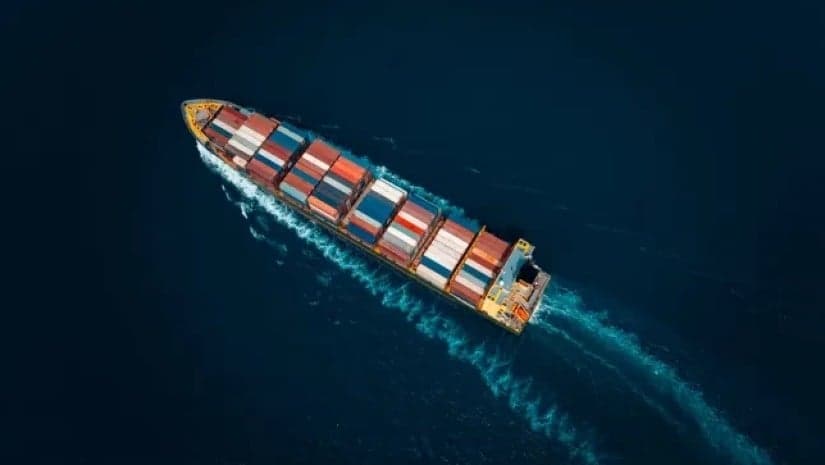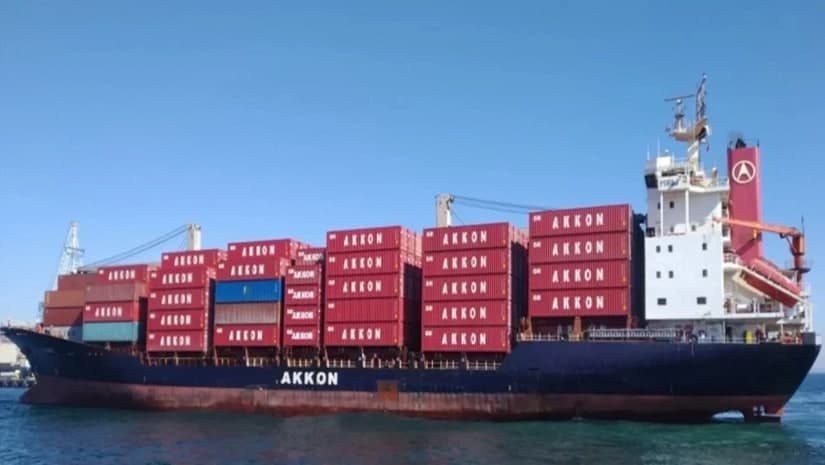
Turkish container carrier Akkon Lines plans to launch a new Black Sea feeder service between Turkey and Georgia in early November, according to a review by the Transport Corridor Research Centre (TCRC). The centre links the move to the disruption of shipping routes in the Black Sea, which has pushed carriers to redeploy ships away from Russian ports.
The Poti Shuttle
The new service, named Poti Shuttle, will carry containers between the port of Derince, in Turkey's Izmit region, and Poti:
- Vessel and capacity: the 344 TEU container ship CHONA will serve the route at the start.
- Schedule: the first sailing from Derince is planned for 4 November, with departures every nine days after that.
At that frequency the service offers about 40 sailings a year, or roughly 14,000 TEU of nominal capacity in each direction.
Poti Shuttle complements Akkon Lines' existing Black Sea service, which links Derince with Constanța in Romania and with Varna and Burgas in Bulgaria using a 686 TEU vessel.
Why the carrier is turning to Georgia
According to TCRC, the change became possible after Akkon Lines, which had run container services between Turkey and Russia with two vessels, suspended calls at Russian ports. In early September the company told customers that all Russia-bound cargo, whether at sea or on land, would be returned or discharged at the ports of loading.
The suspension followed a drone attack on RMS Team, a Barbados-flagged container ship bound for Novorossiysk. Akkon Lines later changed its operating model for Russian cargo, routing it via St Petersburg instead of Novorossiysk.
TCRC describes Akkon Lines as one of the largest carriers on the Black Sea. Its role has grown since early August, when Russia's Fesco stopped sailing in the Black Sea after Ukrainian naval drones sank its container ship Yanina near Novorossiysk.
A connectivity gap to close
In TCRC's view, new container routes into Georgian ports first of all improve the country's connectivity. Georgia ranks 119th in the world in the latest Liner Shipping Connectivity Index (LSCI), which, the centre says, shows that the country and its ports are still far from becoming a regional maritime hub. Any new container line calling at a Georgian port should therefore be seen as a clearly positive trend, and TCRC concludes that the Poti Shuttle is a significant improvement in Georgia's Black Sea connectivity.
What it means for investors
A direct, regular link to Derince ties Poti more closely to Kocaeli, one of Turkey's most industrialised provinces. For shippers, more frequent sailings mean shorter waits and more routing options. For terminal and logistics operators in Poti, they mean more boxes to handle, store and move inland by road and rail.
The shift also shows how security risks elsewhere on the Black Sea can redirect services towards Georgia. Volumes that follow carrier redeployments can reverse if conditions change, so the more durable signal is the broader one: Georgia's low connectivity ranking leaves room for growth, and each new service strengthens the case for container-handling capacity and customs-zone space around Poti, where port capacity is already tight.
Source: Transport Corridor Research Centre (TCRC), via Commersant.ge, 22 October 2026.